
After a DUI arrest in Colorado, one of the most pressing questions you may have is whether you will be required to use an ignition interlock device (IID) and, if so, for how long. An IID is a breathalyzer installed in your vehicle that requires a breath sample before the engine starts and will prevent the car from starting if it detects alcohol above a certain threshold. The key word, though, is “required,” because none of these consequences are automatic. You are entitled to a DMV hearing before any license revocation or interlock requirement takes effect, and the outcome of that hearing matters.
The Denver DUI defense attorneys at Shazam Kianpour & Associates are here to help. With over 22 years of experience and recognition from both National Trial Lawyers and Super Lawyers, our team has helped thousands of Colorado residents work through DUI-related charges and DMV proceedings. We know how disruptive the prospect of an IID requirement can be, and we are committed to fighting for the best possible outcome in your case from the very start.
Your Right to a DMV Hearing
Before any IID requirement can take hold, the state must go through a formal process. When you are arrested for a DUI in Colorado, the Department of Revenue sends a notice that gives you a limited window of time to request a hearing with the DMV Hearings Division. If you request a hearing in time, a hearing officer will review the evidence and determine whether the license revocation should be upheld.
This is where an attorney can make a significant difference. A skilled DUI defense attorney may be able to challenge the evidence presented at the hearing, including the legality of the traffic stop, the accuracy of the chemical test, or whether the arresting officer followed proper procedures. If the revocation is not sustained at your DMV hearing, your driving privileges remain intact, and no IID requirement is imposed. The interlock scenarios described below only apply if the revocation is ultimately affirmed.
Potential IID Timeframes If the Revocation Is Upheld
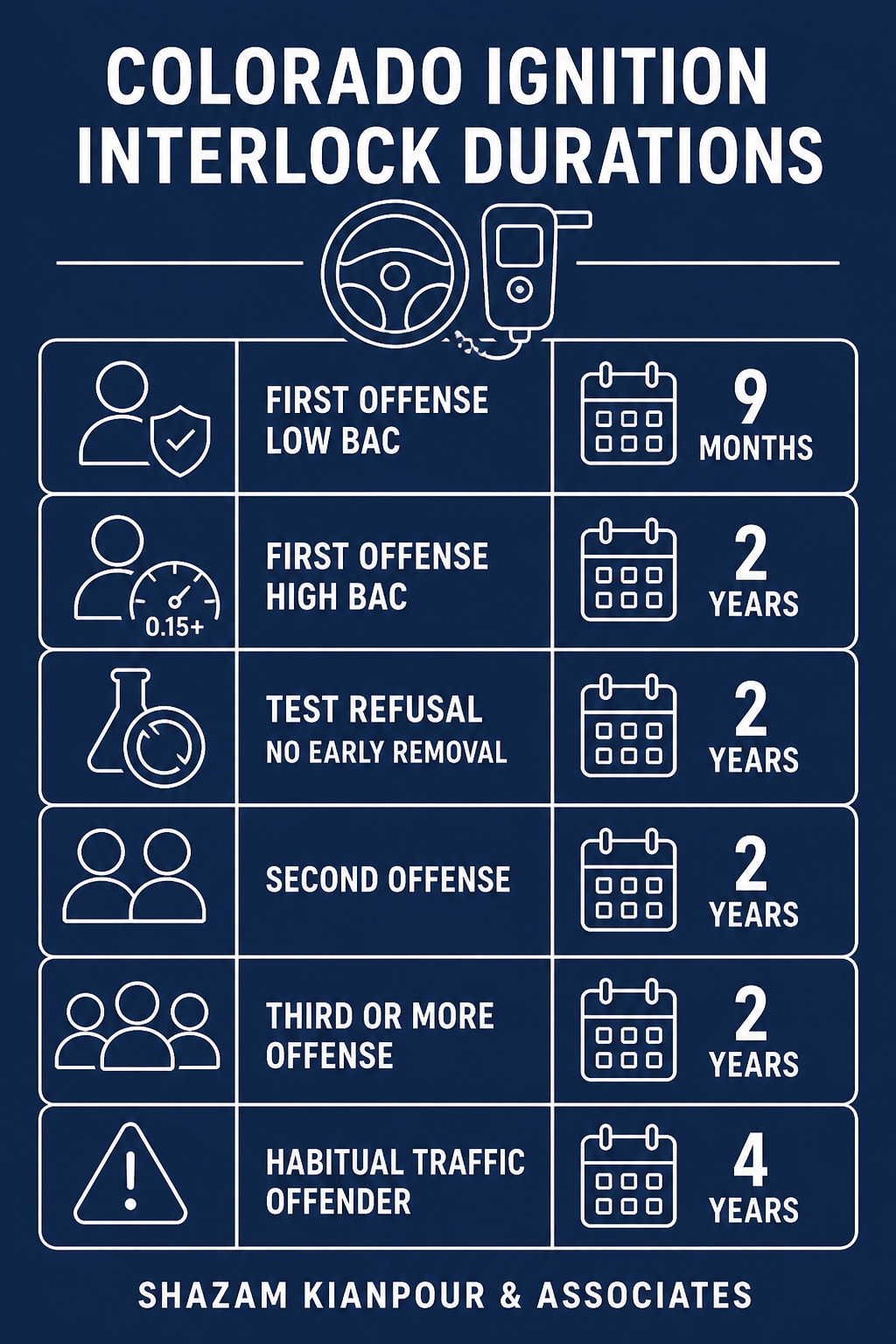
If you lose at your DMV hearing or do not request one in time, the Colorado DMV’s Ignition Interlock Program outlines the following potential interlock periods based on the nature of the offense. These are the ranges you could be looking at, not a foregone conclusion.
The timeframes vary based on BAC, prior offenses, and whether a chemical test was refused. Here is a general overview of what the DMV may impose:
- First DUI with a BAC below 0.15%: Nine months of IID use
- First DUI with a BAC of 0.15% or higher (Persistent Drunk Driver designation): Two years
- Refusal of a chemical test: Two years, with limited early removal options
- Second DUI conviction: Two years
- Third or subsequent DUI conviction: Two years
- Habitual traffic offender designation: A minimum of one year, potentially longer
These are the requirements that land on a driver after the revocation is affirmed and reinstated through the IID program. Any violation of the interlock terms, such as tampering with the device or having someone else provide a breath sample, can extend your requirement and result in additional consequences. You can read more about ignition interlock device lockouts and the importance of staying compliant throughout the monitoring period.
The Persistent Drunk Driver Designation
One of the more significant IID-related outcomes in Colorado is being designated a Persistent Drunk Driver (PDD). This designation is triggered when a driver’s BAC is 0.15% or higher, even on a first offense. Colorado reduced the PDD threshold from 0.17% to 0.15% in 2014, which means more first-time offenders now fall into this category if the revocation is sustained.
A PDD designation carries a mandatory two-year IID requirement rather than the standard nine months if the case proceeds through the DMV process unfavorably. It also comes with additional requirements, including mandatory alcohol treatment and education. If you are facing a potential PDD designation, it is worth understanding what that means for your case and how our attorneys can work to protect your record and driving privileges from the start.
What About a Chemical Test Refusal?
Refusing a chemical test at the time of a DUI stop does not make the IID issue go away. If the revocation from a refusal is sustained at your DMV hearing, Colorado law provides for a two-year IID requirement. The point, however, is that you still have a right to contest the revocation at a hearing before any of that applies. Refusing a test does not eliminate your options. It means the stakes at your hearing are higher, which is exactly why having experienced legal representation at that proceeding matters enormously.
Can the IID Requirement Be Reduced or Ended Early?
In some situations, yes. If the revocation is upheld and you do enter the IID program, Colorado does allow certain drivers to apply for early reinstatement of their driving privileges. First-time offenders with a lower BAC may be eligible to reinstate early and complete the interlock period ahead of schedule, though early removal is generally not available in refusal cases. Our blog on having your ignition interlock device removed early covers eligibility in more detail. Failed IID tests or evidence of tampering during the monitoring period can reset your timeline, so compliance throughout the process is critical.
If you are also navigating a license reinstatement after a DUI, our page on getting your Colorado driver’s license reinstated provides additional context on what that process looks like.
Contact Shazam Kianpour & Associates to Defend Your Rights
Facing a DUI arrest and the uncertainty of what comes next is an overwhelming situation. The good news is that nothing described above is automatic. Every driver is entitled to due process, including a formal hearing where the state must prove its case before any revocation or interlock requirement takes effect. Having the right legal team on your side from the beginning can change the trajectory of that process.
Shazam Kianpour & Associates has been defending Colorado drivers against DUI charges for over two decades. Our firm has earned recognition from Super Lawyers and the National Trial Lawyers, and we bring personal attention to every case that larger firms simply cannot match. If you have been charged with a DUI in Denver or anywhere across Colorado, do not wait to get help. Reach out through our online contact form today to schedule a consultation.
Written by
Shazam KianpourDenver Criminal Defense Attorney & Founder, Shazam Kianpour & Associates, P.C. — Over 10,000 criminal and traffic cases handled across Colorado.