
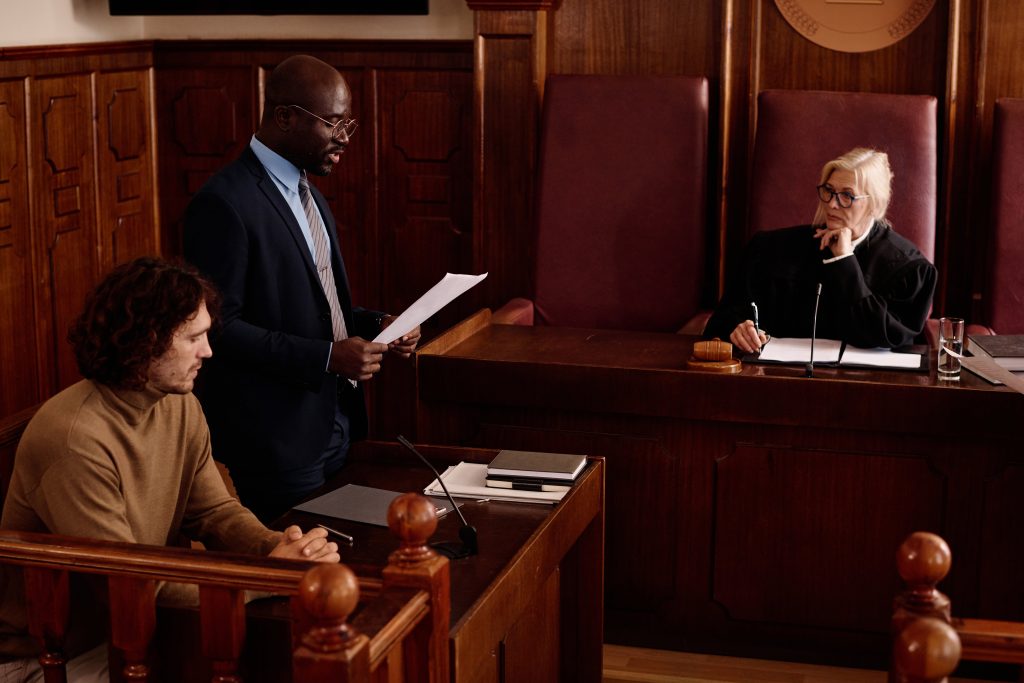
Self-defense is one of the most powerful affirmative defenses available under Colorado criminal law — but it is also one of the most difficult to successfully argue without experienced legal representation. If you are facing an assault charge, a domestic violence allegation, or any other offense where force was involved, understanding what the law actually requires you to prove — and where the defense has limits — is critical.
Colorado’s Self-Defense Law: The Basics
Colorado’s self-defense statute is codified at CRS 18-1-704. It allows a person to use physical force on another person to defend themselves or a third party when they reasonably believe that force is necessary to prevent an imminent unlawful physical force against them or that third party. The law does not require a person to retreat before using force in self-defense.
The Elements You Need to Establish
1. Reasonable Belief of Imminent Threat
The threat you were responding to must have been immediate and imminent — not something that might happen in the future, and not retaliation for something that already occurred. The legal standard is an objectively reasonable belief: would a reasonable person in your exact situation, with your knowledge of the circumstances, have believed they faced imminent unlawful force?
This objective standard is important because it means the question is not simply whether you personally felt threatened, but whether that belief was reasonable. A subjective feeling of fear, without objective circumstances to support it, may not satisfy the element.
2. Proportionality of Force
The force you used in response must have been proportional to the threat you faced. You may not use deadly force to respond to a non-deadly threat. In Colorado, deadly physical force — force likely to cause death or serious bodily injury — is only justified when you reasonably believe it is necessary to prevent imminent death or serious bodily injury to yourself or another.
This means escalating a fistfight to use of a weapon, or continuing to strike someone who is clearly incapacitated and no longer a threat, breaks the proportionality requirement and can eliminate the self-defense claim entirely.
3. You Were Not the Initial Aggressor
Under Colorado law, a person who provoked or instigated the physical encounter generally cannot claim self-defense. There is an exception: if you were the initial aggressor but then clearly withdrew from the encounter and communicated your withdrawal, and the other party continued to threaten or use force, you may regain the right to defend yourself.
This nuance is frequently at issue in mutual combat situations, bar fights, and domestic incidents where both parties have engaged in escalating conduct.
Defense of Others
Colorado’s self-defense statute also extends to the defense of a third party. If you used force to protect someone else from imminent unlawful force, the same elements apply: your belief that the other person faced imminent harm must have been objectively reasonable, and the force you used must have been proportional to the threat they faced.
The Burden of Proof
Self-defense is an affirmative defense, which means that once the issue is properly raised at trial, the prosecution must disprove it beyond a reasonable doubt. You do not need to prove self-defense by a preponderance of the evidence — the burden shifts to the state to disprove it. However, the defense must be properly raised and supported by evidence, which is why the facts of the case and how they are presented matter enormously.
Evidence That Supports a Self-Defense Claim
- Surveillance or cell phone footage showing the sequence of events
- Witness testimony establishing who initiated or escalated the confrontation
- Physical evidence of injuries consistent with your account
- Prior threats or documented history of violence by the other party toward you
- 911 call recordings and their timing
- The physical size and capability of each party involved
When Self-Defense Arguments Fail
Common reasons self-defense claims fail in Colorado courts include: the defendant was found to be the initial aggressor, the force used exceeded what the threat warranted, the defendant’s own statements to police undermined the claim, or the physical evidence contradicted the stated sequence of events. Early attorney involvement — before any statements are made to police — significantly improves the chance of a successful self-defense defense.
At Shazam Kianpour & Associates, P.C., our violent crimes defense attorneys have built successful self-defense arguments across hundreds of cases in Denver and the Front Range. Call 303-825-1075 or contact us online for a free consultation.

Written by
Shazam KianpourDenver Criminal Defense Attorney & Founder, Shazam Kianpour & Associates, P.C. — Over 10,000 criminal and traffic cases handled across Colorado.