
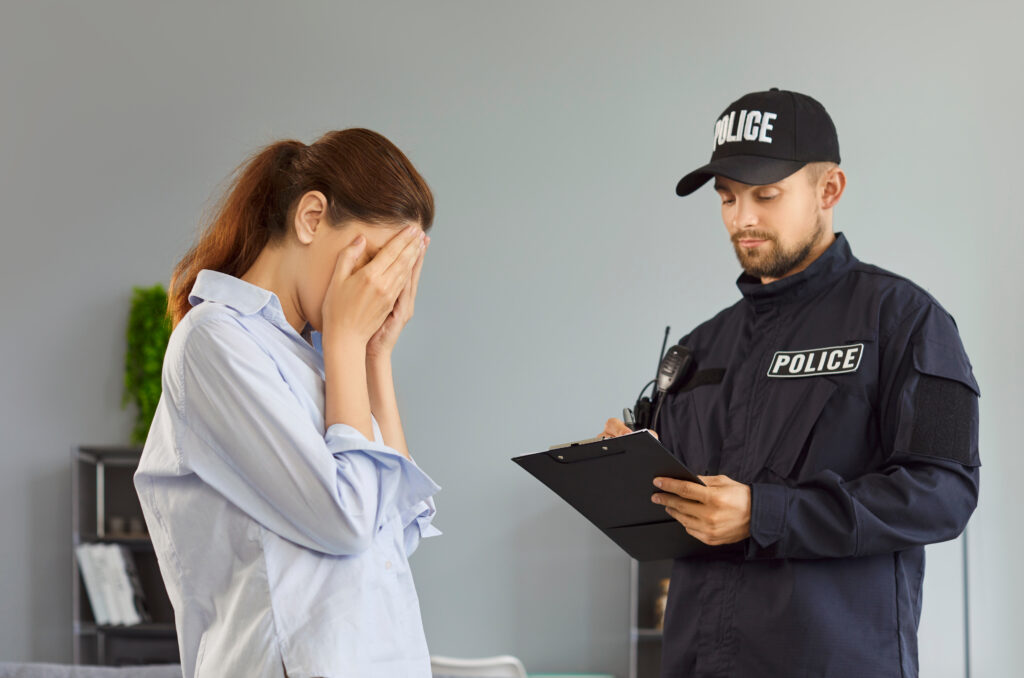
When police respond to a domestic violence call in Colorado, they are not there to sort out who started it. State law requires an arrest whenever officers have probable cause to believe abuse happened, and in practice that almost always means someone is going to jail that night. The real question officers are weighing in the moment is usually much simpler than people expect: who looks like they got hurt worse, and who doesn’t.
At Shazam Kianpour & Associates, we have spent more than 22 years defending people in Colorado on exactly these calls, and we know how one-sided this process can feel to someone standing in their own driveway in handcuffs. Founding attorney Shazam Kianpour has tried domestic violence cases among the wide range of criminal matters he has handled, and attorney Eric Chenoweth is part of the same team, bringing that same approach to every case we take on.
The Arrest Is Close To Automatic
Colorado Revised Statute 18-6-803.6 requires police to arrest whichever person they determine is primarily responsible, a decision officers sometimes call identifying the “predominant aggressor,” whenever probable cause exists. Officers are not supposed to just separate a couple, take statements, and let everyone cool off on their own. If someone called 911 and there is evidence of a physical altercation, an arrest is coming.
In the real world, that decision usually comes down to a quick visual read, and that is the pattern we see again and again in these cases. If one person has a visible mark, a scratch, redness, anything that shows up in a photo, and the other does not, the person without a mark is almost always the one who gets arrested. Officers are not running a deep investigation on scene. They are making a fast call on what they can see and what each person says in the first few minutes.
Why This Catches People Off Guard
Most people assume police will hear both sides and make a careful judgment call. What actually happens is closer to triage. Defend yourself and end up with a scratch while the other person has nothing visible, and you can still leave in the back of a patrol car. The officer is not trying to find the full story of a relationship with its own history. They are trying to clear the scene and avoid sending two people to jail from the same house.
This is also why so many Colorado domestic violence arrests look lopsided once the case reaches an attorney. The person arrested was often defending themselves, reacting to being cornered, or simply had the bad luck of marking more visibly. None of that gets sorted out on scene, and that is where having the right attorney matters.
What Happens After The Arrest
Once someone is arrested for domestic violence in Colorado, the consequences move fast and are largely out of their hands. State law requires an overnight hold, meaning bail cannot be set until the next day, and a mandatory protection order has to be issued before a judge will even consider bond. That order usually means the arrested person cannot go home and cannot contact the other person in the relationship, even if both people want the case to go away.
The U.S. Department of Justice’s Office on Violence Against Women has published guidance for law enforcement encouraging officers to look past who has visible injuries and consider the full context of a call. That guidance exists precisely because the quick, visual read is so common in the field.
Building A Defense After A Fast Arrest
A defense attorney reviewing one of these cases is not starting from a blank page. There is usually body camera footage, 911 audio, and sometimes photos taken on scene, and all of it can tell a more complete story than the few minutes an officer had to work with. Our domestic violence defense work often starts by pulling that evidence together and figuring out whether the person arrested was defending themselves, reacting to a threat, or simply the one who happened to show a mark.
Some of these cases also involve a restraining order that needs its own look, especially when it is keeping someone out of their own home before any case has been decided.
We Know How These Cases Actually Play Out
A domestic violence arrest in Colorado happens fast, and it is rarely the result of a careful weighing of both sides. It is usually a quick read on the scene, and that read is not always right. Across Denver, Aurora, Littleton, and Highlands Ranch, we have represented people arrested simply because they came out of the encounter looking less hurt, and we know how to take that fast decision apart once the full picture comes out.
If you or someone you love was arrested after a domestic violence call in Colorado, do not wait to get help with your options. Our team at Shazam Kianpour & Associates has spent over two decades in Colorado courtrooms on exactly these cases, and we are ready to review what happened before the arrest was made. Contact us today to talk through your case.

Written by
Shazam KianpourDenver Criminal Defense Attorney & Founder, Shazam Kianpour & Associates, P.C.